Is Front Windshield Tint Worth It in Florida in 2026? What Boca Raton Drivers Need to Know
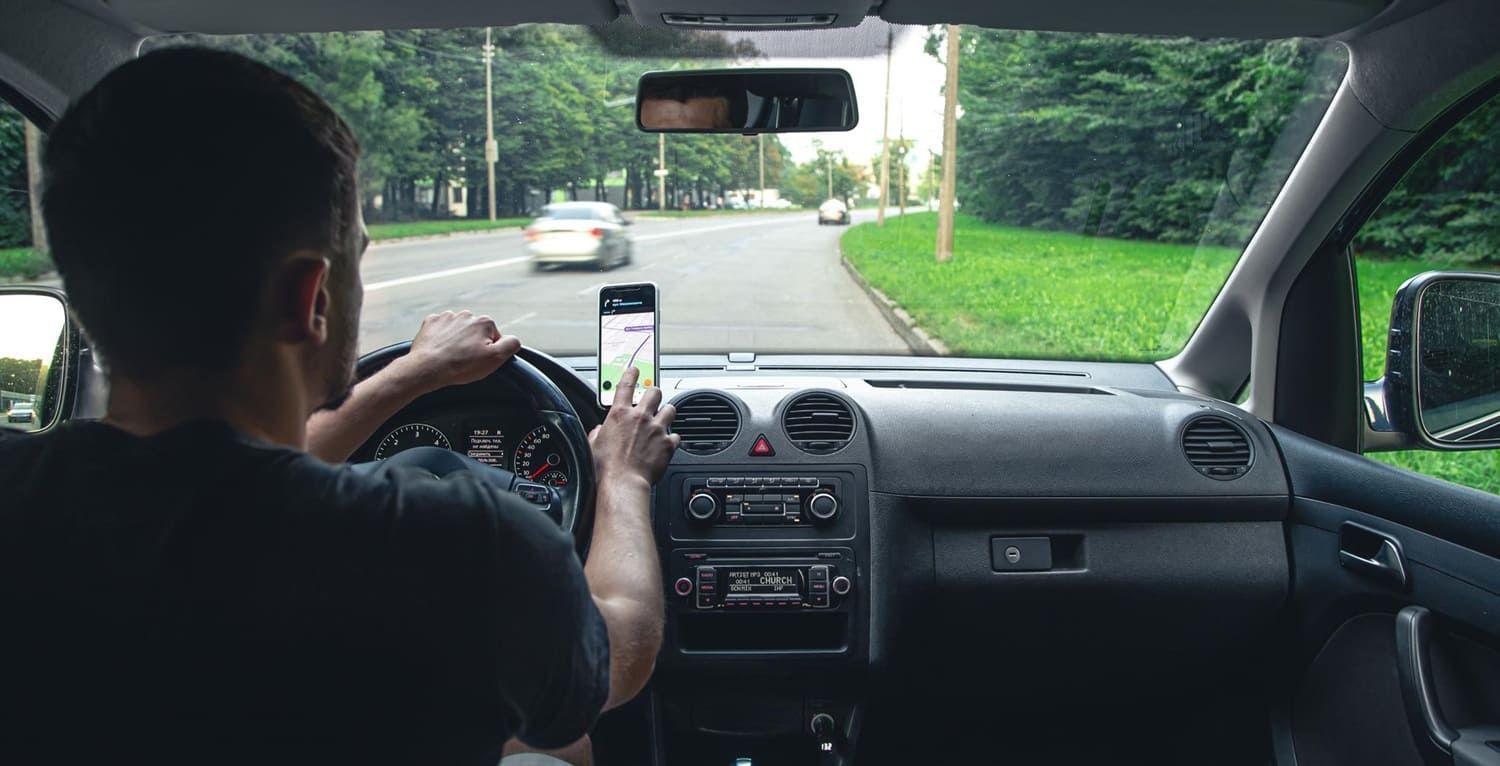
Front windshield tint sits in a strange middle ground where most drivers know it exists but aren't entirely sure what's legal, what's actually available, or whether it does anything meaningful versus the side and rear windows they're more familiar with tinting. In Florida — where the sun beats down at near-tropical intensity through most of the year — the windshield question matters more than in most states. It's the largest pane of glass on the car, it faces the road directly, and in South Florida's summer heat it can pour solar energy into the cabin all day long.
So is front windshield tint worth it in 2026? The honest answer is: it depends entirely on what type of film you're talking about and whether it's installed legally. Florida law does not permit the kind of visible, dark tint on the front windshield that you might put on rear side windows. But that is not the end of the story — not by a long shot. Near-clear and optically clear ceramic films, like the LLumar AIR Series installed by West Boca Tint & Accessories, are specifically engineered for windshield application. They block 99% of harmful UV rays, reduce interior temperatures by at least 26°F, and are virtually undetectable on the glass — all while staying fully within Florida's legal window tinting requirements.
This guide is written for Boca Raton drivers and vehicle owners across Palm Beach County, Delray Beach, Boynton Beach, Pompano Beach, Coral Springs, and surrounding South Florida communities who want a straight answer on what windshield tint is, what's legal, and whether it's actually worth doing in 2026.
What Florida Law Actually Says About Windshield Tint
Before getting into products or benefits, the legal question needs to be answered clearly, because it's the foundation of everything else.
Florida's window tinting laws, which were first enacted in 1991 and updated in 2015, draw a hard line at the windshield. The rule for both sedans and SUVs/vans is the same: non-reflective tint is only permitted on the windshield above the manufacturer's AS-1 line. The AS-1 line is the boundary marked on the windshield glass itself — typically a thin line printed near the top edge, usually sitting about five inches down from the roof. Any film applied below that line on the front windshield must be non-reflective and, practically speaking, optically clear.
What this means in plain terms: you cannot legally apply a dark, visible tint film across the main driving area of your windshield in Florida. That rules out the deep charcoal or darkened films that are common on side and rear windows. However — and this is the critical point most drivers miss — non-dark, near-clear ceramic film applied across the full windshield is not prohibited by this law, provided it meets the non-reflective standard. Clear ceramic films like the LLumar AIR Series fall into exactly this category. They are optically clear, non-reflective, and designed to be installed on windshields and factory-tinted windows without altering appearance or violating state law.
West Boca Tint & Accessories maintains current familiarity with Florida's tinting regulations and installs films in compliance with state law, which matters because interpretation of tint rules can vary at the local level across Palm Beach and Broward Counties.
What Clear Windshield Film Actually Does
This is where many drivers are surprised, because the assumption is that a nearly invisible film couldn't possibly accomplish much. That assumption underestimates what modern nano-ceramic technology is capable of doing.
LLumar AIR Series is a micro-thin nano-ceramic film that is barely detectable on the glass — optically clear enough that it can even be installed on factory-tinted windows without visible change. What happens at the molecular level is different from what the eye sees: the ceramic nanoparticle structure selectively filters solar energy across the spectrum, blocking UV radiation and a meaningful portion of infrared heat, without meaningfully altering visible light transmission.
Here is what the AIR Series specifically delivers on a windshield:
UV Protection at 99%+
The film blocks more than 99% of both UVA and UVB radiation passing through the windshield — the same level of UV rejection as darker colored films. This protection is endorsed by the Skin Cancer Foundation as part of a comprehensive skin care program. For Florida drivers who spend meaningful time commuting on I-95, US-1, or the Palmetto Expressway, accumulated UV exposure through an untreated windshield adds up across years of daily driving. Drivers in the United States are statistically documented to have higher rates of skin cancer on their left side — the window-facing side — a direct consequence of UV exposure while driving.
Interior Heat Reduction of at Least 26°F
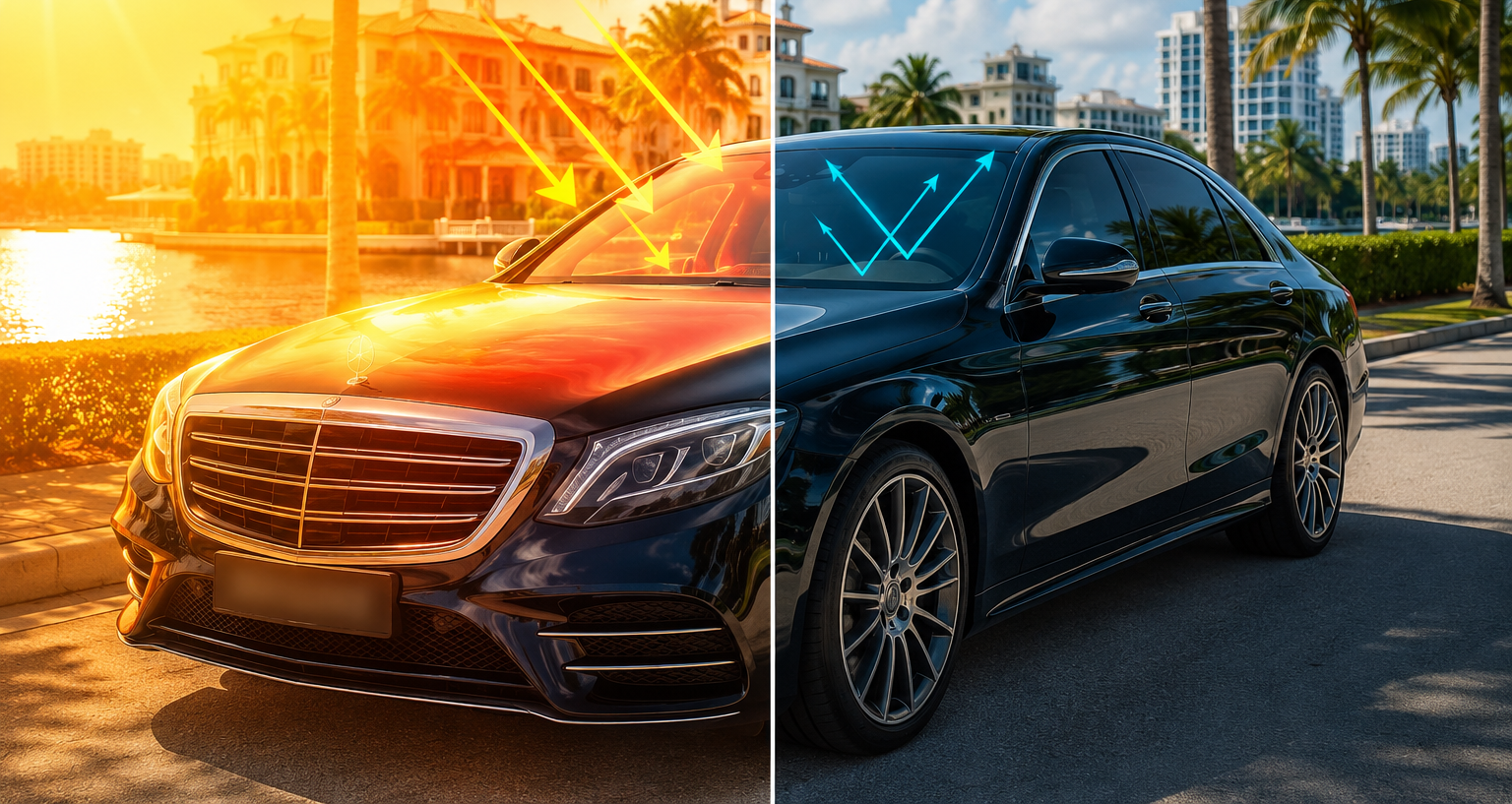
The LLumar AIR Series is documented to reduce interior surface temperatures by at least 26°F. The windshield represents a large, forward-facing surface through which the sun pours heat directly onto the dashboard, steering wheel, center console, and front seat occupants. Reducing that heat input at the source — the glass itself — produces a measurably cooler cabin, faster cool-down when the AC kicks on, and lower AC workload throughout the drive. In Boca Raton's summer heat, where cabin temperatures can spike dramatically within minutes of parking, that 26°F reduction in surface temperatures is a meaningful real-world improvement.
Glare Reduction Without Distortion
Glare coming through the windshield — whether from direct sun, low-angle morning or evening light, or reflections off wet roads — is both a comfort issue and a safety one. Clear ceramic film reduces incoming glare without introducing haze, distortion, or a color shift that could affect the driver's ability to read the road accurately. The AIR Series is designed with high optical clarity and low reflectivity specifically so it does not impede night driving vision, a genuine concern with lower-quality films.
Shatter Resistance
Because the film is bonded to the inside surface of the windshield glass, it provides an additional layer of structural integrity. In the event of impact — whether from a road projectile, accident, or break-in — the film helps hold glass fragments together rather than allowing them to scatter. This is a safety benefit that has nothing to do with tint darkness but is a meaningful advantage on a windshield specifically.
No Electronic Interference
Nano-ceramic technology is non-metallic, which means the AIR Series does not interfere with GPS navigation, cell phone reception, satellite radio, toll transponders, or radar detectors — all commonly used by South Florida drivers and all potentially disrupted by lower-quality metalized films.
Clear vs. Colored Film for the Windshield: Which Makes Sense?
Drivers who are used to thinking about tint in terms of shade options sometimes ask whether they should opt for a light-shade colored film on the windshield instead of a clear one. In Florida, the practical answer is almost always clear, and here's why.
Even lighter-shade tinted films introduce visible darkening and reflectivity to the glass. For the windshield specifically — where maximum visual clarity is essential for safe driving — any visible color shift or added reflectivity is a legitimate concern, both from a safety standpoint and a legal one. Florida law requires non-reflective film on the windshield, and light-colored films can sit uncomfortably close to the line depending on the product.
Clear nano-ceramic film like the LLumar AIR Series is engineered to sidestep this problem entirely. It delivers the same core ceramic performance — UV rejection, heat reduction, shatter resistance, zero electronic interference — without adding any visible tint, any reflectivity, or any reduction in optical clarity. For windshield application in Florida, this is the product category that makes the most sense for the overwhelming majority of drivers.
| Film Type | Legal on FL Windshield? | UV Rejection | Heat Reduction | Visible Appearance Change | Optical Clarity |
|---|---|---|---|---|---|
| Dark tinted film (below AS-1) | No | High | High | Dark / obvious | Reduced |
| Light-shade tinted film | Borderline / risky | Good | Moderate | Some darkening | Slightly reduced |
| Clear nano-ceramic (AIR Series) | Yes | 99%+ | At least 26°F surface reduction | Nearly none | Excellent — no distortion |
Is It Actually Worth the Cost in 2026?
The practical question for any Boca Raton driver is whether windshield ceramic film is worth paying for compared to either skipping it or spending that budget on the side and rear windows instead.
The argument for windshield film is strongest in Florida for several reasons that don't apply in milder climates. The windshield is the single largest glass surface on the vehicle, and in South Florida it faces near-overhead sun angles for most of the year — delivering more direct solar energy into the front of the cabin than any other window. The driver and front passenger bear the majority of that UV and heat exposure, which makes the windshield the highest-impact glass to address from a health and comfort standpoint.
The accumulation argument is also compelling for UV exposure specifically. Darker side and rear window films are more immediately obvious in their effect — you see and feel the privacy and shade. Clear windshield film's benefits are subtler in appearance but add up quietly across thousands of driving hours over the life of the vehicle. The UV that doesn't hit the driver's face and hands during a 45-minute Boca Raton commute, repeated five days a week for years, represents a real reduction in cumulative skin UV exposure. That is a concrete health benefit, not a marketing abstraction.
When paired with professionally installed colored tint on the side and rear windows, windshield ceramic film completes a full vehicle treatment — delivering protection and heat rejection across all glass surfaces at once. West Boca Tint & Accessories installs the full range of FormulaOne and LLumar SelectPro films backed by a lifetime limited manufacturer's warranty against color change, bubbling, and cracking for as long as you own the vehicle. That warranty applies to AIR Series as well, meaning the windshield installation is protected long-term without any additional maintenance required.
What Professional Installation Adds to the Equation
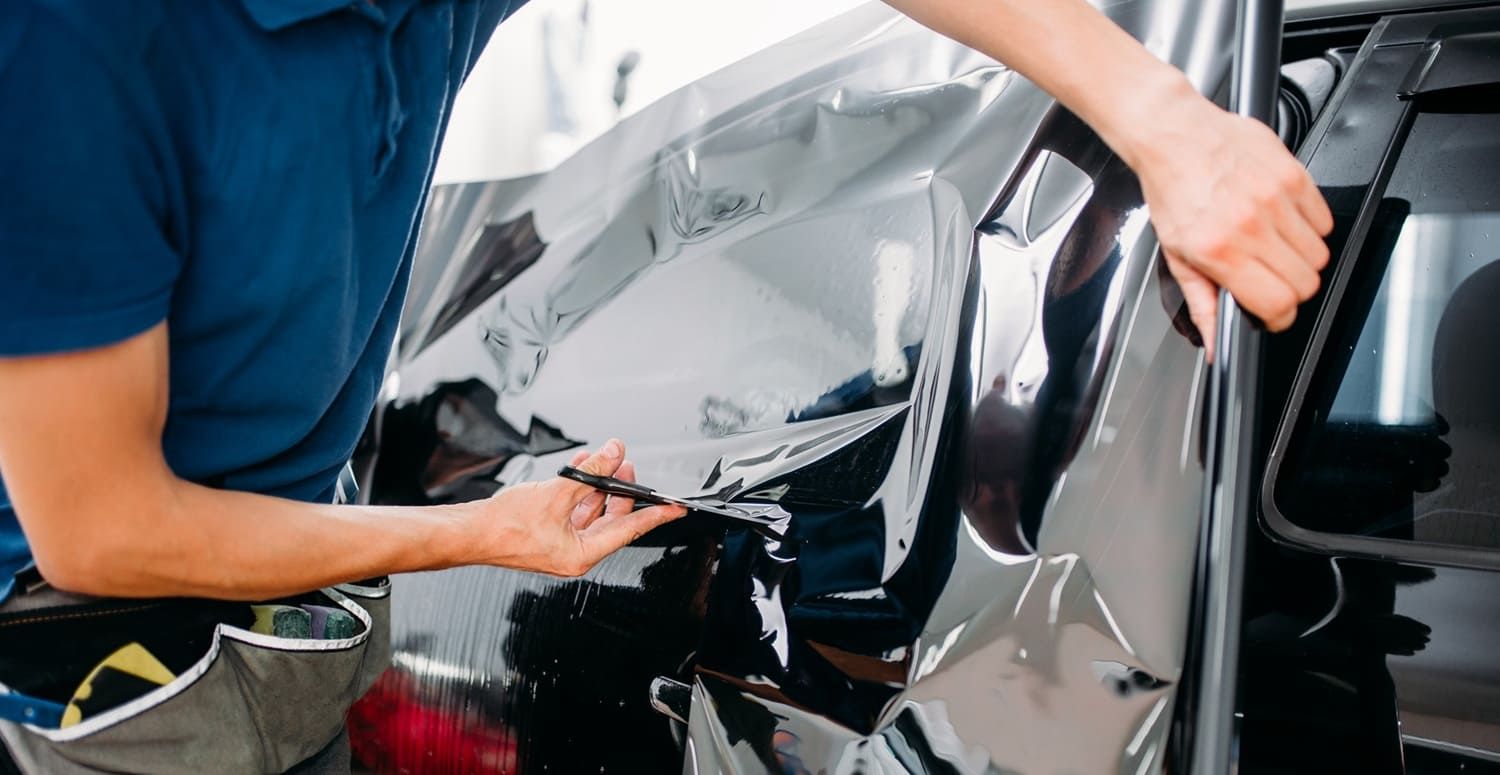
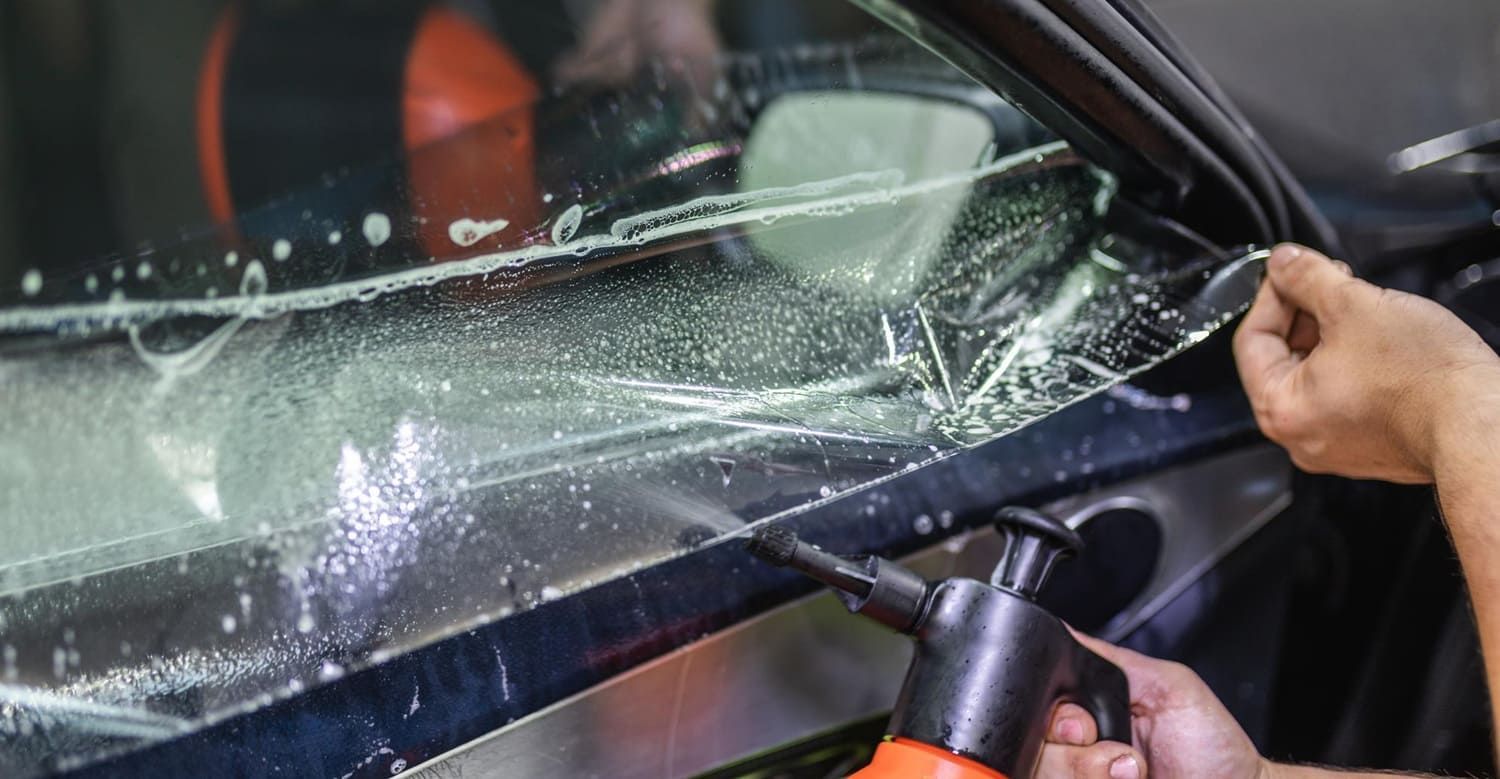
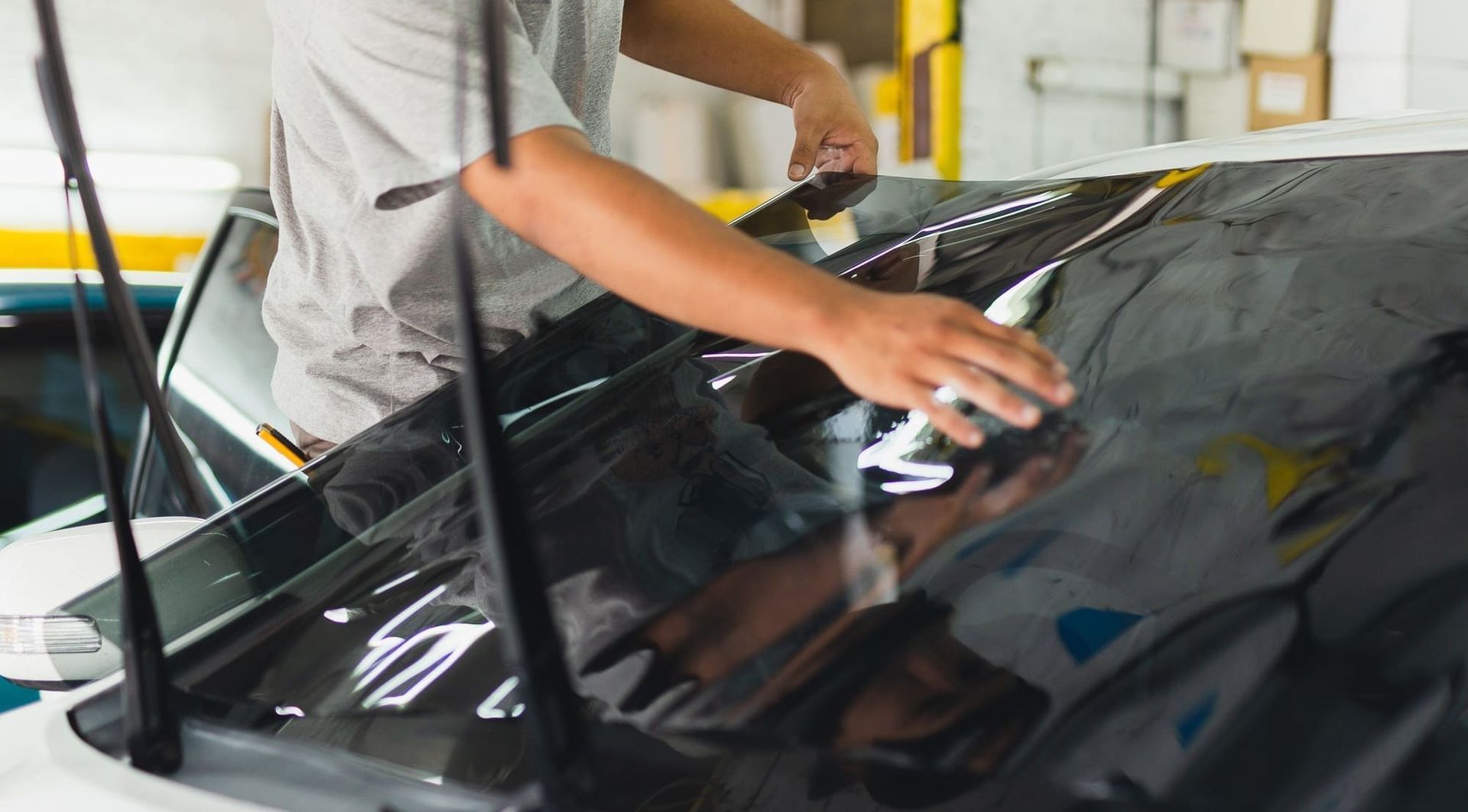
Clear films on windshields are more unforgiving of installation errors than darker films, where minor imperfections can be harder to see. Because optically clear film is, by definition, transparent, any dust contamination, bubbles, edge lifting, or adhesive inconsistencies become far more visible during daylight driving. The practical consequence is that DIY installation or low-quality shop work on clear windshield film often looks worse than no film at all.
Professional installation by trained technicians using proper tools, controlled-environment prep, and manufacturer-specified techniques eliminates these risks. West Boca Tint & Accessories is an authorized LLumar SelectPro Film Dealer — the highest designation in LLumar's dealer network — and backs every installation with both a customer satisfaction guarantee and the lifetime limited manufacturer's warranty. That combination of film quality, installer training, and warranty accountability is what separates a windshield film that performs invisibly and correctly for years from one that distracts the driver within months.
Frequently Asked Questions
Is windshield tint legal in Florida in 2026?
Dark, visible tint below the manufacturer's AS-1 line is not legal in Florida. However, non-reflective, optically clear ceramic film — such as the LLumar AIR Series — is legal on the windshield and does not violate Florida's tinting statutes. It is non-reflective and visually undetectable, which is exactly what the law requires.
Will clear windshield film get me pulled over?
No. Optically clear film like the LLumar AIR Series is virtually undetectable on the glass and does not add visible darkening or reflectivity. Law enforcement is looking for darkened film that reduces visibility or exceeds reflectivity limits. A properly installed clear ceramic film presents no such issue.
Does clear windshield tint actually reduce heat?
Yes, measurably so. The LLumar AIR Series is documented to reduce interior surface temperatures by at least 26°F by blocking the near-infrared solar energy that passes through untreated glass. The windshield is typically the single largest heat-entry point in the vehicle, so this is a meaningful improvement.
What is the AS-1 line on a windshield?
The AS-1 line is a marking printed on the windshield glass by the manufacturer, typically appearing as a thin line near the top of the windshield, roughly five inches below the roofline. Florida law permits non-reflective tint above this line on the windshield. Clear ceramic film installed across the full windshield — being non-reflective — complies with this requirement.
Can clear windshield film be installed on top of factory-tinted glass?
Yes. Because the LLumar AIR Series is optically clear, it can be installed on factory-tinted windows and windshields without changing their appearance. It adds UV and heat protection on top of what the factory glass already provides.
Does windshield film interfere with GPS, toll transponders, or radar detectors?
No. LLumar AIR Series uses nano-ceramic technology, which is non-metallic and non-conductive. It does not interfere with GPS navigation, toll transponders (SunPass), cell phone signals, or radar detectors — all important considerations for South Florida drivers.
The Bottom Line for Boca Raton and South Florida Drivers
Front windshield tint in Florida in 2026 is not about dark film and privacy — that's not what the law allows and it's not what this product category is designed to do. It's about applying the best available nano-ceramic technology to the largest, most sun-exposed glass on your vehicle so it works as hard as the rest of your tint package. Clear ceramic film on the windshield blocks 99% of UV rays, reduces surface temperatures by at least 26°F, cuts glare without affecting night visibility, and adds shatter resistance — all without altering the appearance of your vehicle or creating any legal concern.
West Boca Tint & Accessories serves Boca Raton and surrounding communities including Delray Beach, Boynton Beach, Pompano Beach, Coral Springs, Deerfield Beach, and Fort Lauderdale as an authorized
LLumar SelectPro Dealer, the highest quality film designation in the industry. Every installation is backed by a lifetime limited manufacturer's warranty and the shop's own customer satisfaction guarantee.
Call (561) 561-TINT (8468) or request a
free estimate online to find out which film option makes sense for your vehicle.